Ever wondered if banking training could be as engaging as your favorite Netflix series—or even TikTok? Let’s face it: traditional bank training has long been the corporate equivalent of watching paint dry. Endless slides, lectures designed to put caffeine to sleep, and compliance modules strong enough to cure insomnia. But here's the good news: those days are officially over.

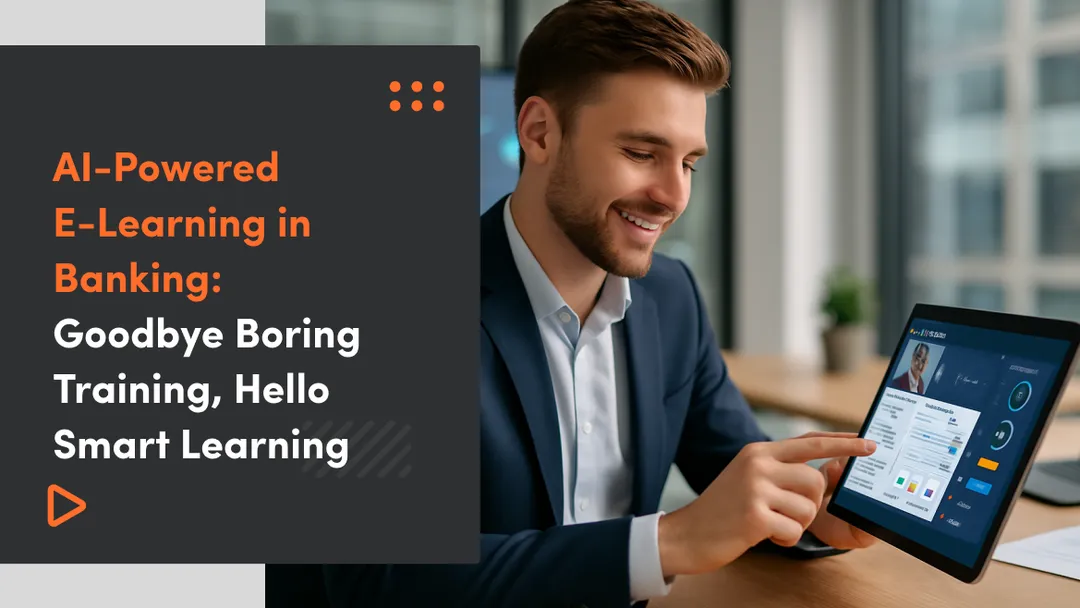
Thanks to AI-powered e-learning, banks are finally shaking things up. Forget the dull—think dynamic, personalized, and interactive. With cutting-edge tech, banks are not just upgrading how employees learn; they’re turning learning into an experience employees actually want to engage with.
From Dull Modules to Dynamic Learning Adventures
E-learning in banking has evolved massively. What started as basic online modules has now morphed into intelligent, immersive platforms tailored to every learner.
Why Banks Are Going All-In:

Anywhere, Anytime Access: Employees can train on their own schedule, from any device.
Flexible Pacing: No more one-size-fits-all classrooms.
Hyper-Personalized Learning Paths: Thanks to AI, employees get content that matches their skills, roles, and career goals.

Real-World Examples
Bank of America’s Virtual Revolution
Bank of America offers a comprehensive ecosystem of learning resources, including on-demand training, live workshops, and interactive online courses. These programs support employee development across a wide range of skills—from financial literacy and job readiness to customer service and digital safety. At the heart of this initiative is “The Academy”, Bank of America's immersive learning and development platform. It provides role-specific training journeys that span from onboarding new hires to advanced career mastery.
What sets it apart is the use of Virtual Reality (VR) technology that simulates real-world customer interactions and workplace scenarios, enhancing learning engagement and practical skills development. Bank of America is a pioneer in leveraging VR and AI technologies to create impactful educational experiences. These innovations are integral to "The Academy," which empowers employees with the tools and training they need to meet client expectations, uphold compliance standards, and thrive in a rapidly evolving industry.

HSBC’s AI-Powered Personalization
HSBC integrates Artificial Intelligence (AI) to personalize learning paths, enhance customer service skills, and strengthen regulatory compliance. Since 2021, HSBC has partnered with Silent Eight, leveraging AI models to automate compliance-related decision-making processes, such as transaction monitoring and alert analysis. AI also supports HSBC in adapting to evolving regulatory requirements and identifying financial risks.

Bank of America and HSBC are two notable examples of banks embracing e-learning platforms. Bank of America utilizes a robust e-learning platform that helps employees stay updated with the latest banking trends and regulatory requirements, while HSBC leverages AI-powered training tools to enhance skill development, compliance awareness, and customer engagement.
Learning That Doesn’t Feel Like Work
Modern banking training is nothing like the old days. Today, it’s all about interaction, immersion, and even a bit of fun.
Gamification: Leaderboards, badges, and points turn training into a challenge worth winning.
Simulations: Practice real-world scenarios in safe, virtual settings. Make mistakes, learn fast—no risk involved.
VR & AR: Immersive tech brings customer interactions, branch experiences, and complex problem-solving to life.

Barclays’ Interactive Learning Journey
For example, Barclays offers innovative training programs like “LifeSkills”, which incorporate virtual work experience tools. These experiences allow participants to interact with Barclays employees and work on simulated banking projects—offering a form of experiential learning that mirrors real-world challenges. The bank also leverages interactive games and scenario-based exercises, particularly focused on customer service situations. These help employees strengthen their communication, critical thinking, and problem-solving skills in a dynamic and engaging format.
Meet Your New AI Learning Assistant
AI isn't just a buzzword—it’s the engine behind modern e-learning. It constantly monitors how employees learn, what they need, and how they’re performing. Then it adapts the experience in real-time.
What AI Brings to the Table:
Custom Learning Paths: AI suggests next steps based on progress and skills gaps.
Instant Feedback: Automated assessments help learners course-correct immediately.
AI Assistants: Smart chatbots offer 24/7 help and guidance through training modules.
Insight-Driven Optimization: AI pinpoints training weak spots (e.g., Anti-Money Laundering) by analyzing performance trends across teams.
It’s not just about saving time—this is about creating results-driven training that keeps employees engaged and banks compliant.
What’s Next? Future-Proofing Bank Training

The future of banking training is faster, smarter, and more mobile. Here’s what’s on the horizon:
Future Trends:
Microlearning: Bite-sized modules for learning in short bursts—perfect for busy employees.
Data-Driven Personalization: Real-time analytics tailor training like never before.
Mobile-First Experiences: Learn on the go, anytime, from any device.
Challenges Ahead? We've Got You Covered
However, adopting these technologies comes with its challenges. Banks must overcome hurdles such as:
Resistance to Change
Showcase quick wins to inspire enthusiasm. Resistance to change is often the first hurdle, as traditional training methods can make employees wary of new approaches. By demonstrating quick, tangible results through pilot projects and involving staff directly in the testing process, banks can ease the transition and build early enthusiasm.
Budget Constraints
Start small, scale smartly. Budget constraints can also limit the adoption of innovative e-learning tools. Beginning with small-scale projects helps validate the benefits of new technologies without a major upfront investment, while gradually scaling successful initiatives ensures that expenditures remain sustainable. Collaboration with technology partners can further help mitigate financial pressures.
Evolving Regulations
Choose flexible platforms designed for rapid updates. Continuous monitoring of regulatory changes, coupled with ongoing employee training in compliance matters, enables banks to remain agile and maintain a strong culture of adherence. This approach not only addresses immediate challenges but also builds a resilient foundation for the future of bank training.
How Banks Can Stay Ahead
Choose platforms that are intuitive and scalable,
Keep content fresh and regulation-aligned,
Leverage AI for ongoing feedback and performance tracking,
Build a culture of continuous learning—make it part of the DNA, not just an annual checkbox.
Step Into the Future of Banking Training
Banking no longer has room for outdated training methods. With AI-powered e-learning, the industry is stepping into a new era—one where employees actually enjoy learning, skills are built faster, and compliance is embedded seamlessly.

This isn’t just innovation for the sake of it—it’s smart business. Banks that embrace these technologies will be better equipped to adapt, compete, and thrive in a digital-first future. So here’s the question: Is your bank still training like it’s 2005? Or are you ready to level up with AI-driven learning?

CONTACT WITH AUTHOR